


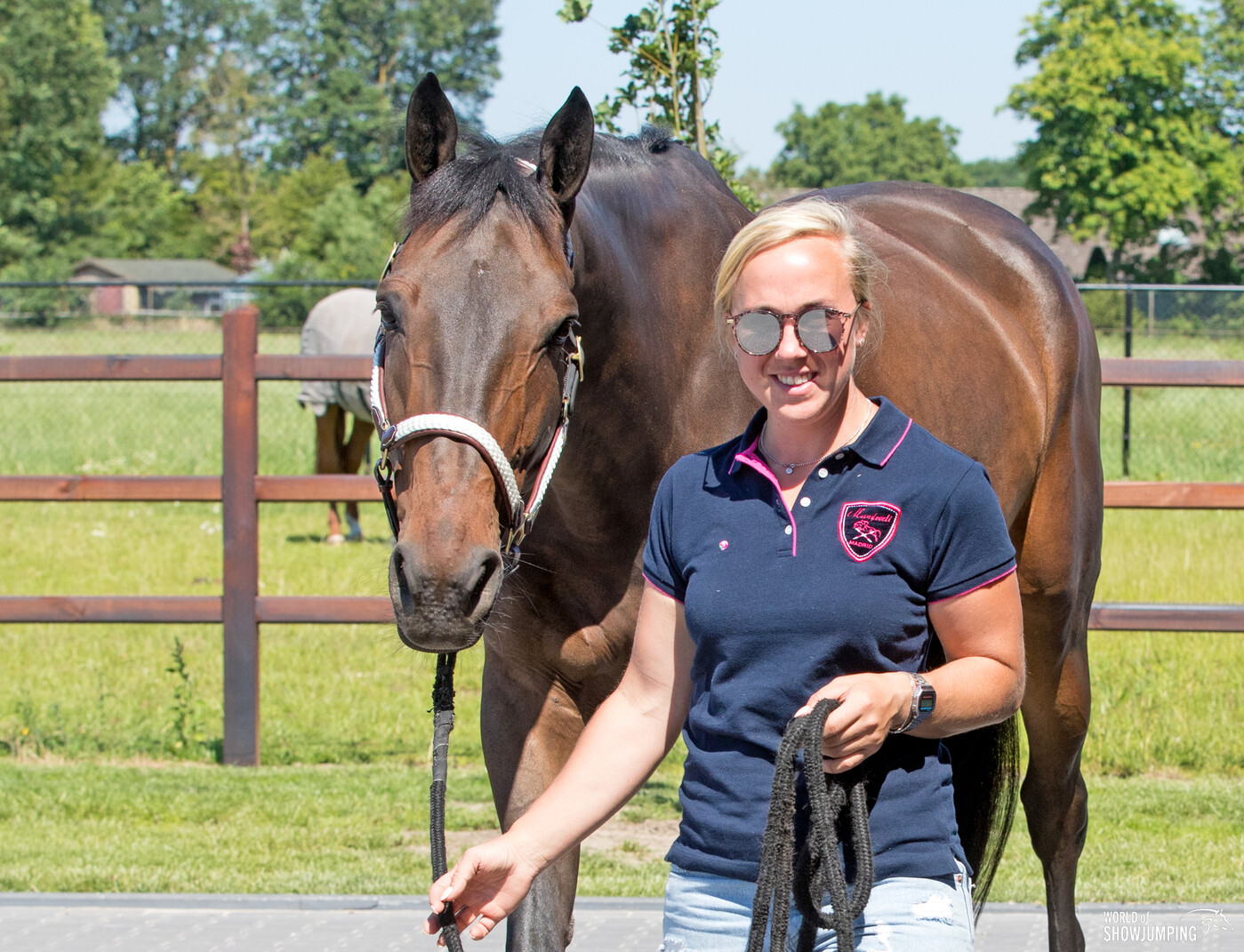
 “We put our horses in situations that are not natural for them, and we have to make sure we do everything we can to keep them comfortable and safe," Malin Jonasson tells WoSJ. Photo © Jenny A Photo/WoSJ.
Text © World of Showjumping
“It is important to remember why we do what we do. We have chosen this line of work and this life, but our horses haven’t,” Malin Jonasson – who for the last 16 years has worked alongside Spain’s Manuel Fernandez Saro – tells World of Showjumping. “We put our horses in situations that are not natural for them, and we have to make sure we do everything we can to keep them comfortable and safe.”
Malin knows what she is talking about. Alongside Fernandez Saro, or Fanfa as he is known among his peers, Malin has groomed at the 2016 Olympic Games, two World Championships and five European Championships – and countless of Nations Cups for the Spanish team. “I think the most important thing is to be open-minded and to always keep learning,” Malin says about her job. “You have to be capable to see what you can learn from a horse and from other people. I'm very lucky that Fanfa and I have the same vision for the horses. He helps out in the stable, he's very hands on. We should all be like that; it's about taking care of each other and the horses.”
Anything that involves horses
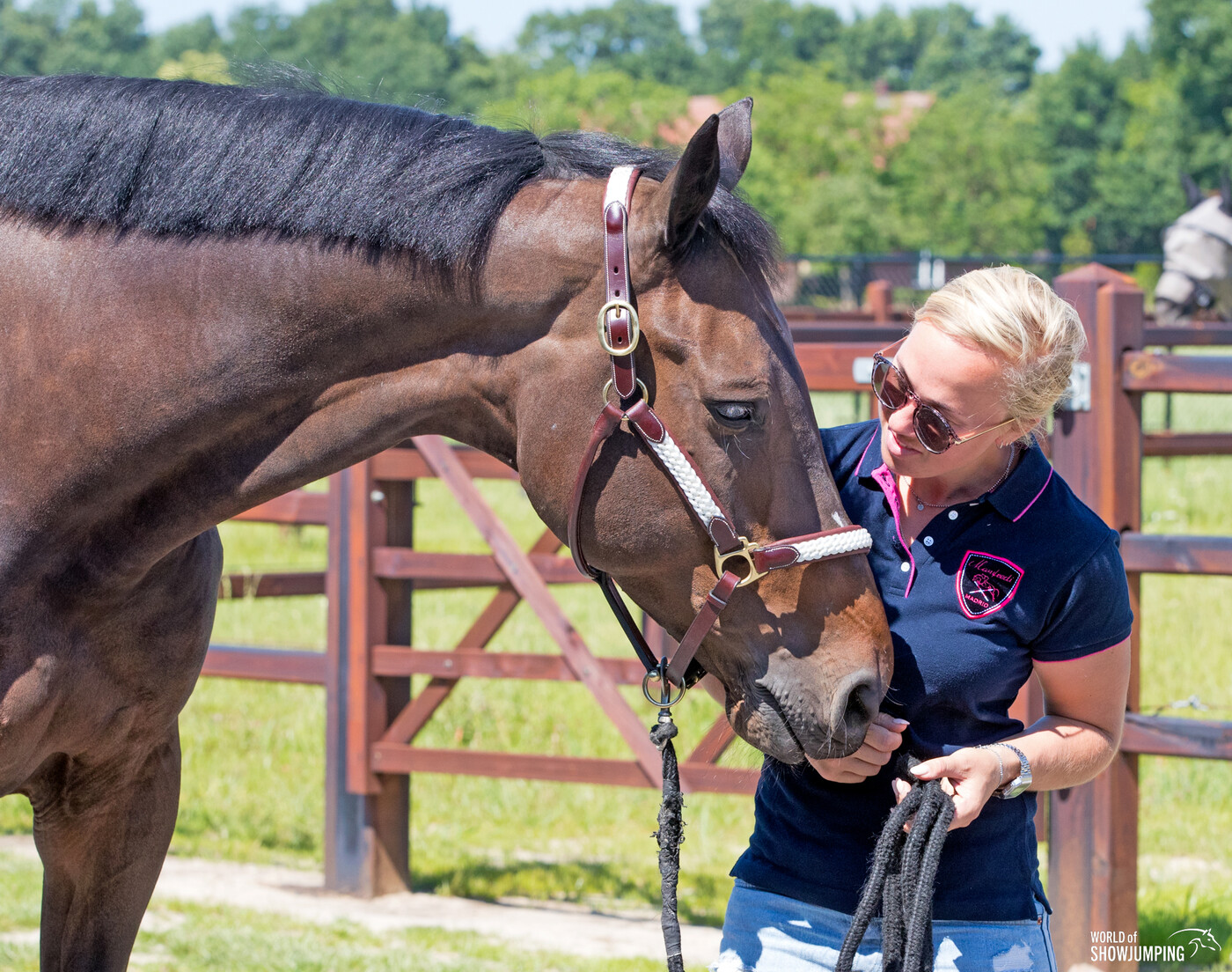 "We have chosen this line of work and this life, but our horses haven’t,” Malin Jonasson – who for the last 16 years has worked alongside Spain’s Manuel Fernandez Saro – tells WoSJ. Photo © Jenny A Photo/WoSJ.
For Malin, it all started at a local riding school in Sweden. “Growing up, my parents thought it was important to give me and my sisters opportunities to explore different activities such as dancing or playing an instrument,” Malin tells. “Riding was an opportunity to teach us responsibility by working with animals. As I started to take lessons, I began helping out at the riding school more and more. I think that's where my love for the horses started. I have always loved animals, but my appreciation for the horses first kicked in when my parents pushed us to go to riding school. I come from a city, so it was an effort to go to the countryside.”
For me it wasn't about grooming or riding, it was more about being with the horses
“For me it wasn't about grooming or riding, it was more about being with the horses,” the 36-year-old continues. “I was always with the horses; after school, even before school – all the time. When I was finishing school, I knew I wanted to go abroad. I just looked online to find something to do that involved horses. One week after I finished high school, I found a job in England for an eventing rider. I had never done eventing, but the job involved horses, so I thought it would be so much fun.”
A professional set-up
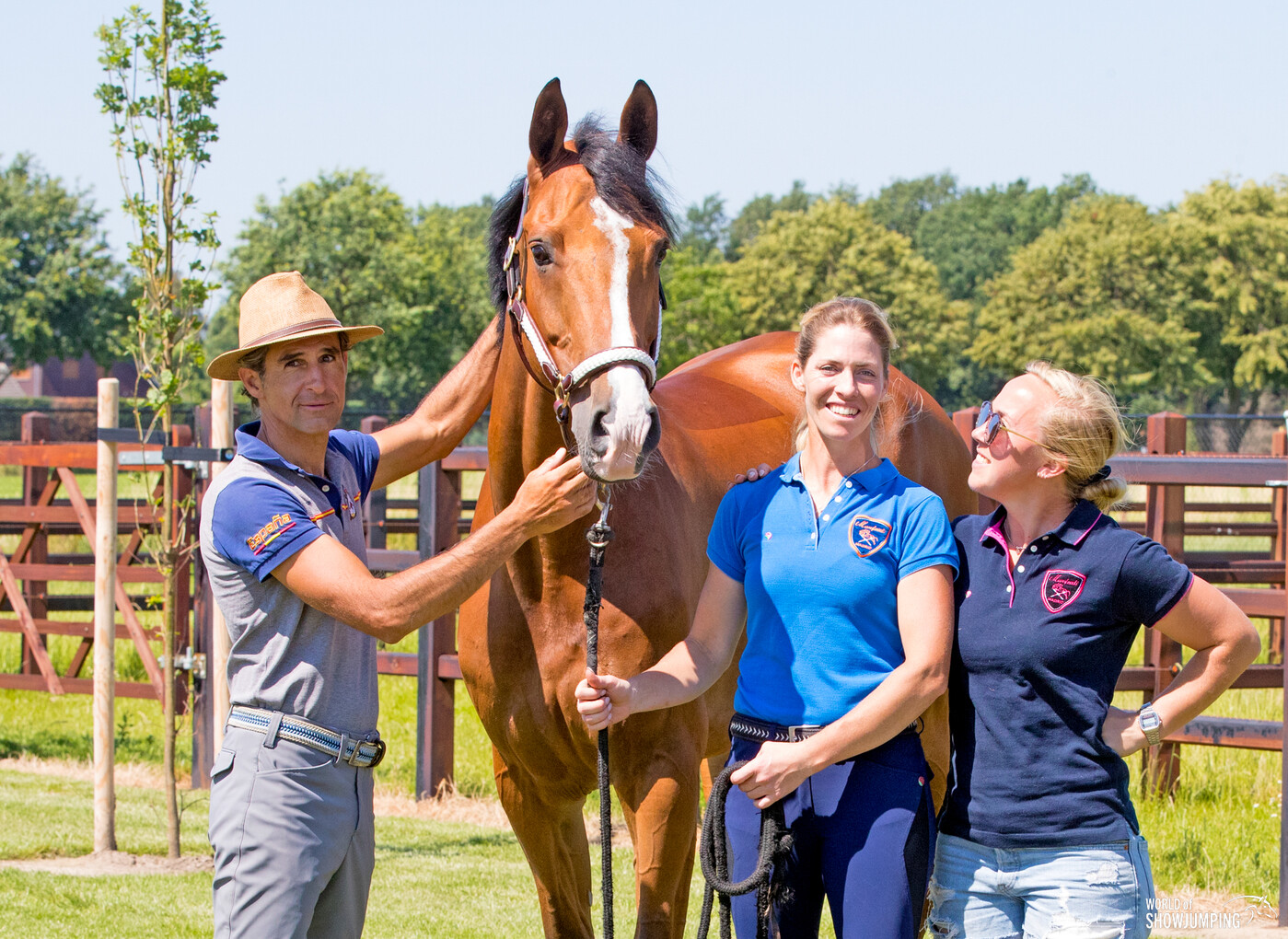 “They both do a lot,” Malin points out about working with Deborah and Fanfa. “They come and help us muck out in the morning, and they tack up their first horses themselves." Photo © Jenny A Photo/WoSJ.
Malin moved to England and stayed there for a year. “I did everything; I worked as a rider, I even did some eventing shows, helped my boss at the shows… It was great. I had so much fun and it was a great community,” Malin explains.
“Then I got a phone call from Sweden, from one of my old trainers. I jumped on that train and took the opportunity she offered me. That led me to Stal Tops,” Malin continues.
In the beginning, it was Fanfa, me and three horses – now it's a bit of a different story
Malin started at Stal Tops in Valkenswaard, the Netherlands, in 2009, on the same day as Fanfa. “That's when we first met. I did shows with him, and it was so much fun,” she tells. “I learned so much from Fanfa and everyone else working at Tops, it was a very professional environment. After Fanfa left, I stayed at Stal Tops as a second groom for Edwina, until my contract was finished in 2010. Then I went to work with Fanfa, who at the time had started to set up his own company. In the beginning, it was Fanfa, me and three horses – now it's a bit of a different story.”
See the horses for the individuals they are
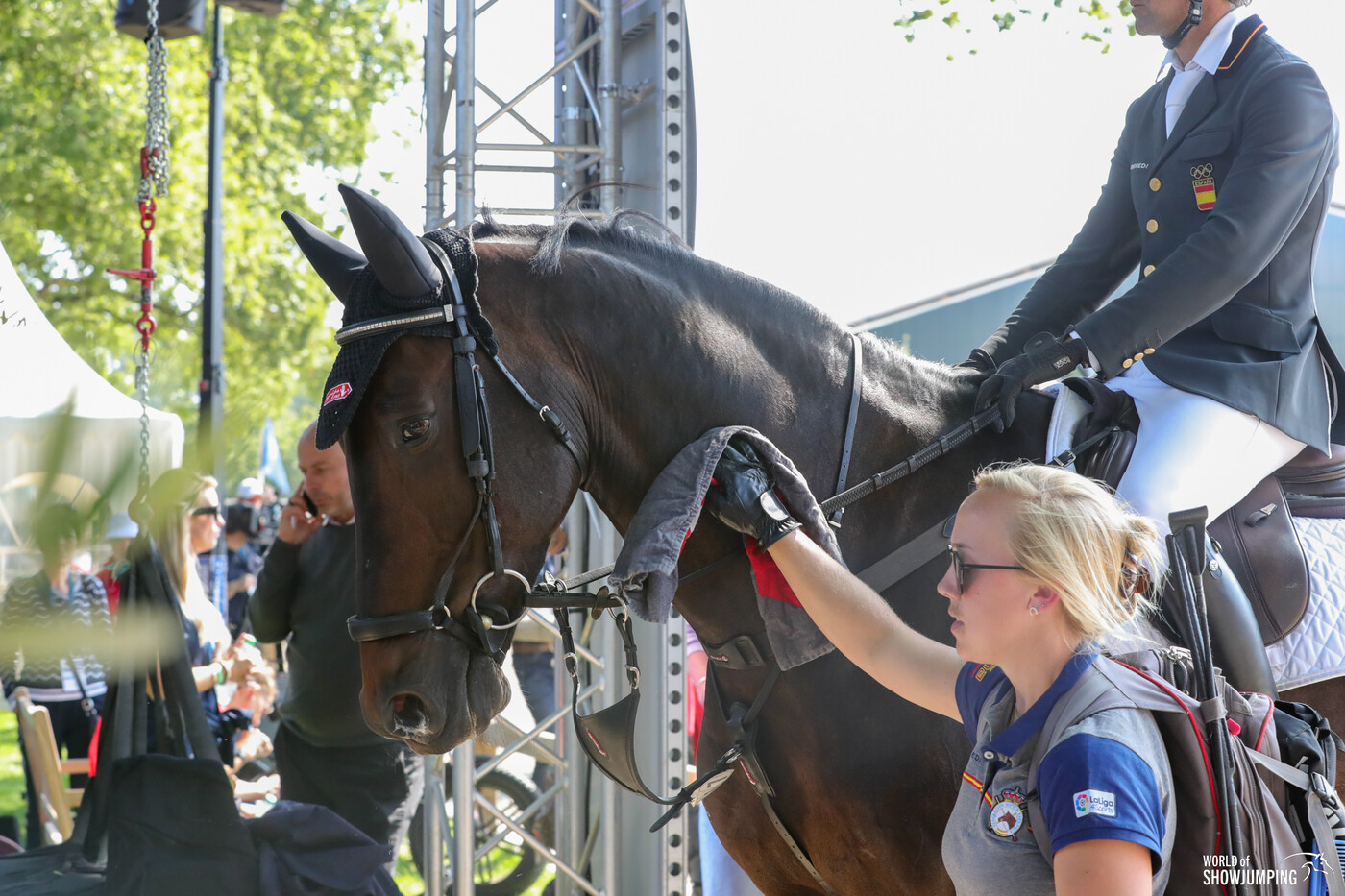 "Horses are animals that we have put into this industry and this sport which is so impressive. That means it’s our responsibility to remember what they are and see them as individuals," Malin points out. Photo © Jenny A Photo/WoSJ.
“We did everything together,” Malin continues to tell about the beginning of the operation at Fanfa and Deborah’s MFS Horses that since then has grown to over twenty horses and four full-time employees with a base close to Peelbergen in the Netherlands. “I was always responsible for the horses, and he drove me everywhere. As the business got bigger, we got more horses and more people.”
“They both do a lot,” Malin points out about working with Deborah and Fanfa. “They come and help us muck out in the morning, and they tack up their first horses themselves. That's something I love; Fanfa wants to work with the horses on the ground and see how they are.”
In the end, we choose to do this job, but the horses don’t so we have to do what's right for them
“My job includes teaching new staff that come to the yard. I want to teach others to think for themselves, observe the horses for what they are and understand what the horses need,” Malin says. “In the end, we choose to do this job, but the horses don’t so we have to do what's right for them. Horses are animals that we have put into this industry and this sport which is so impressive. That means it’s our responsibility to remember what they are and see them as individuals.”
“It’s really important to me that everyone that works with us sees the horse, what the horse needs, and what the horse wants,” Malin points out. “That's an approach that I have I learned with Fanfa. In the beginning, we got a lot of horses that were maybe not the easiest, and we had to figure out how to make them happy. I like to let horses be horses, let them go out in the field and see their personality.”
The horse should come first
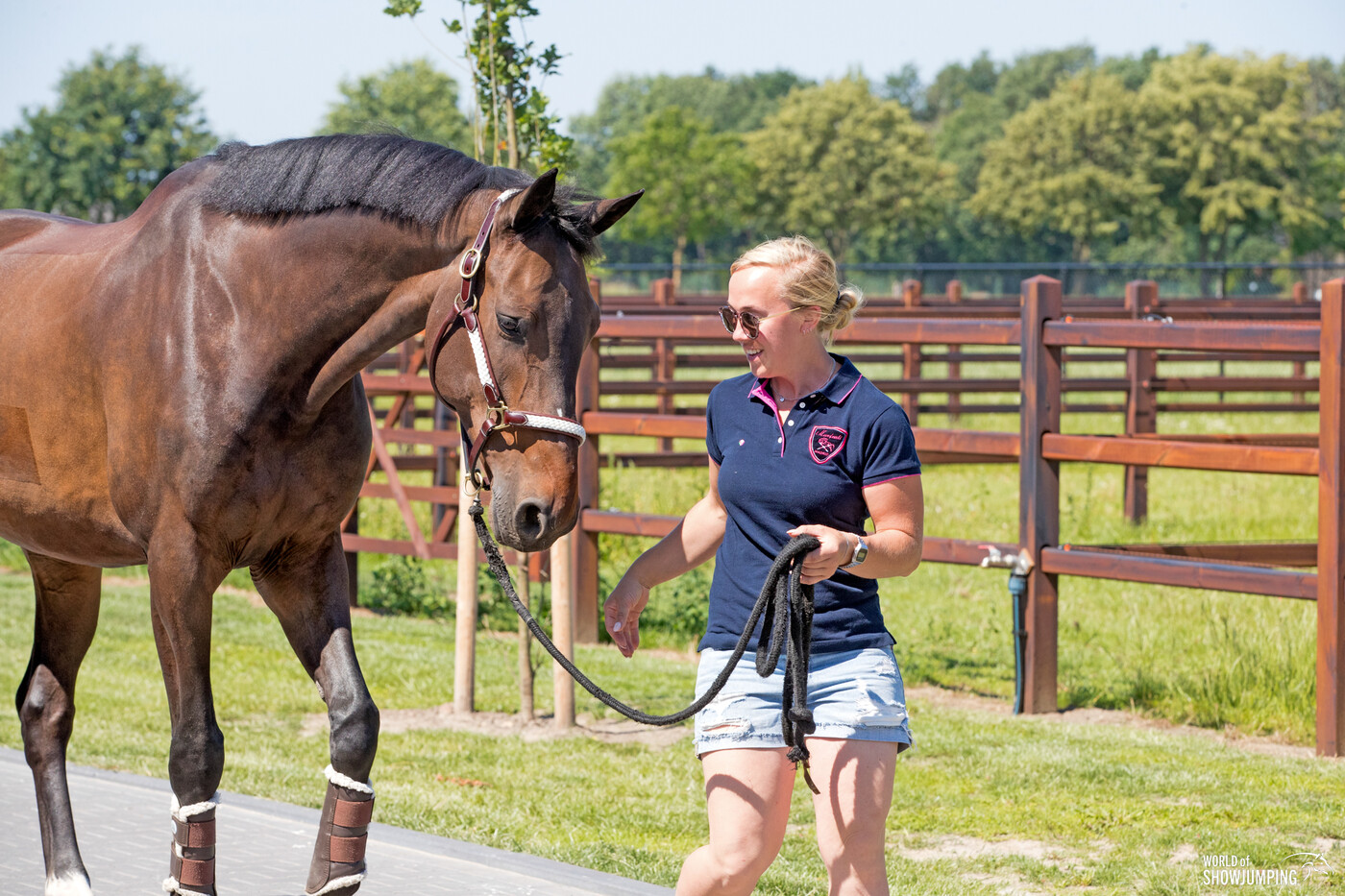 “Shows should be, first and foremost, safe for the horses," Malin explains. Photo © Jenny A Photo/WoSJ.
Since Malin started working as a groom, the sport has gone through significant changes. “I think there are so many shows nowadays, it's hard to keep up,” she says. “It’s also harder for the horses, grooms and riders. You can do shows every weekend of the year if you want. In the end, that's not really possible to maintain unless you have a huge string of horses and a lot of staff.”
“The horses are why we do this and the shows should focus on them,” Malin continues. “Shows should be, first and foremost, safe for the horses. A good stable manager plays such an important role at any show. After a long drive, arriving to a show knowing the stable manager is experienced makes life so much easier. In general, shows have to think more about the horses. Bedding can be an example; most of the shows only have shavings, but a lot of people have their horses on straw. Other basic factors would be having good hay and enough water points.”
The horses are why we do this and the shows should focus on them
“Some shows are very well organised,” Malin points out. “Especially shows that are run by horse people. In the end, it does not take much. Grooms are busy the whole day, and it has to be possible for us to get food from the morning to the evening. When we have good stables, we don't need to worry about our horses. Having a nice area for the horses to take them out, grazing even, would be a nice bonus that not many shows offer. Having a safe parking spot for the lorry with good electricity is another plus. These are all simple points that make our life much easier.”
Keep the tradition alive
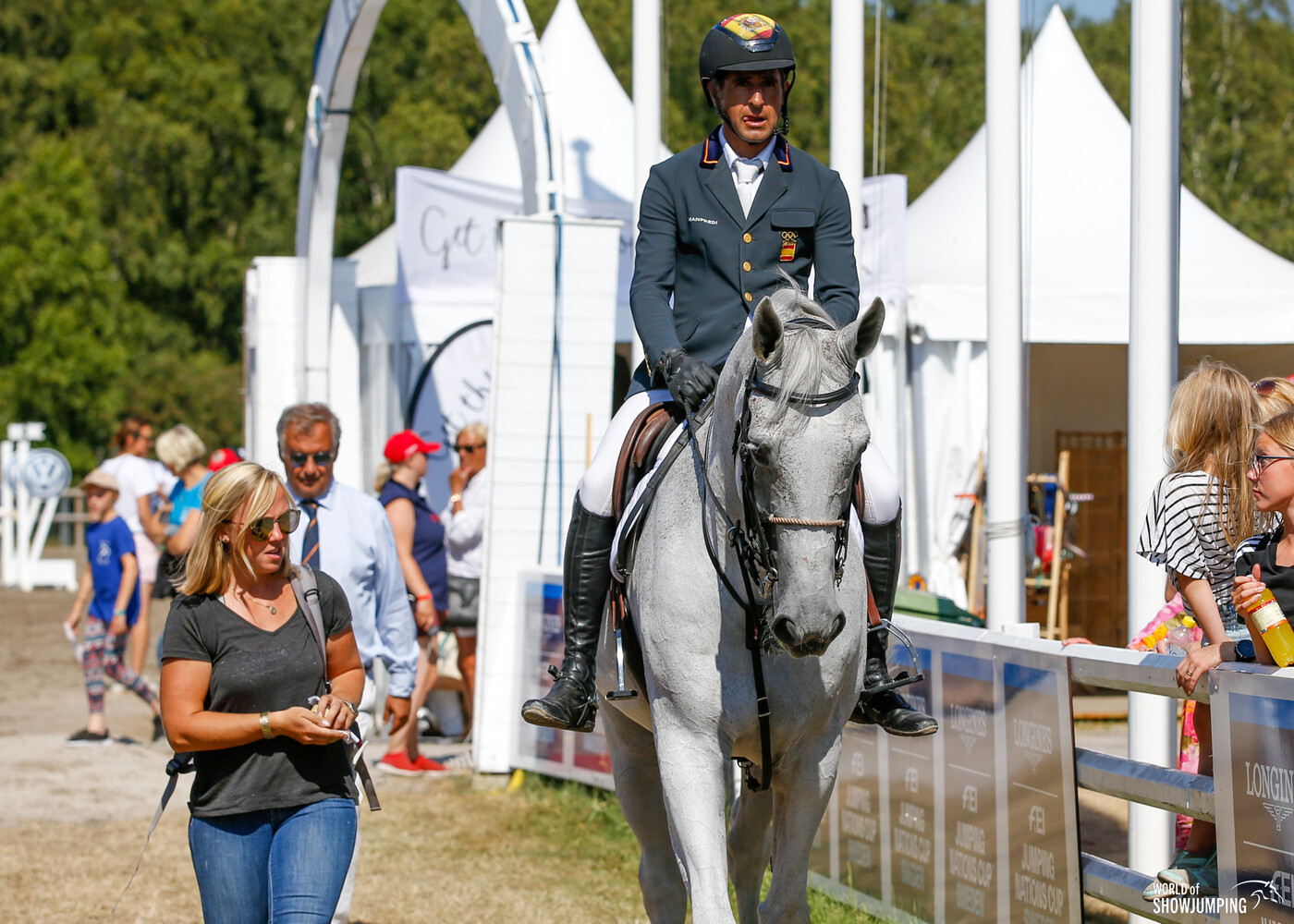 “I always love to go to these old-fashioned shows with the big grass arenas that have an enthusiastic audience," Malin tells. Photo © Jenny A Photo/WoSJ.
As the sport keeps evolving, Malin sees positive changes as well. “Seeing older, traditional venues getting supported by new sponsors makes me very happy,” she says. “I always love to go to these old-fashioned shows with the big grass arenas that have an enthusiastic audience. I think that's the main concern for the future; to keep the audience coming and making the sport available for them to enjoy, just as I could when I was a kid. I loved going to Gothenburg Horse Show! The atmosphere that you experience at these shows is amazing and I'm hopeful that with the new support, at least some of these enthusiastic crowds will come back. Going to shows that are in challenging environments for the horses and not having audience there is a bit sad.”
Seeing older, traditional venues getting supported by new sponsors makes me very happy
One thing Malin would like to see improved is the communication on the constant FEI rule changes. “It's very hard to keep up with all the new rules,” she points out. “Many of us don't have the time to read all the updates. I usually hear about any changes from my colleagues, often after they have had issues. We all want to follow the rules and we want to do what is right for the horses and the sport. Especially in the current climate where our sport is under such scrutiny, we have to make sure that what we are doing is actually for the horses,” Malin concludes.
23.3.2026 No reproduction of any of the content in this article will be accepted without a written permission, all rights reserved © World of Showjumping.com. If copyright violations occur, a penalty fee will apply.






 Then
Then