


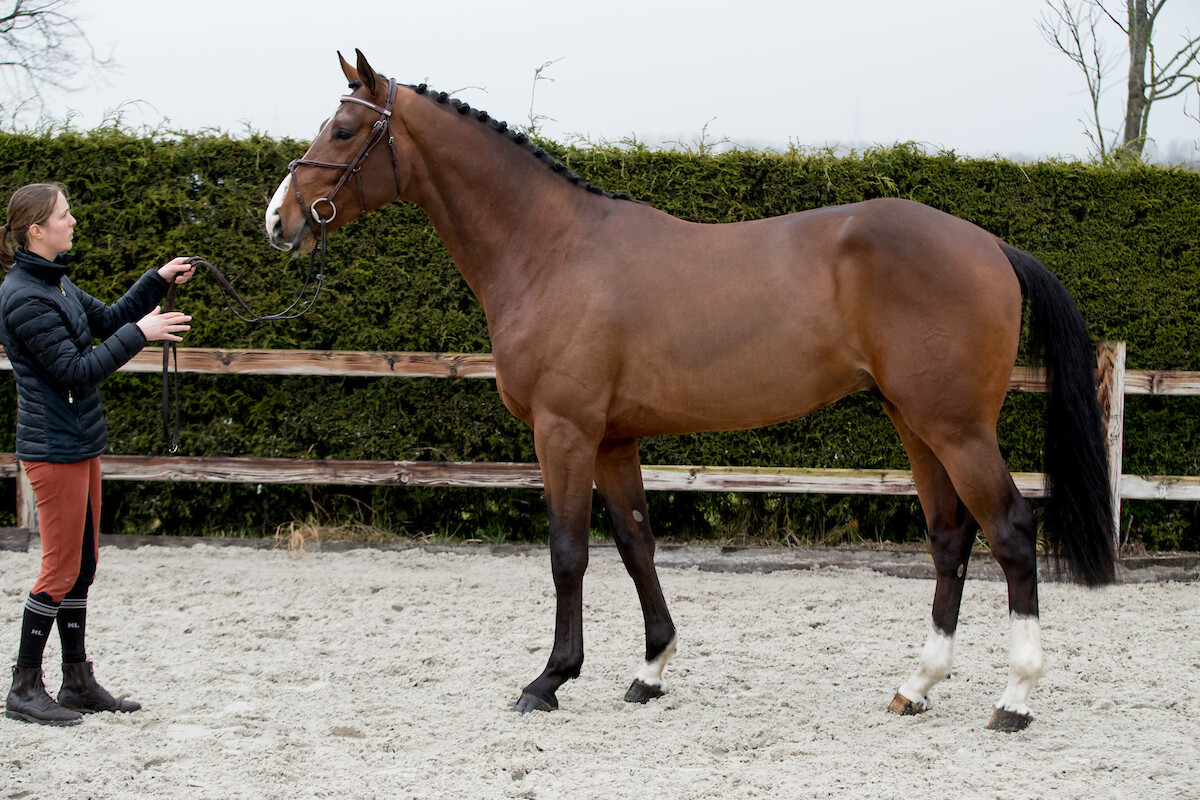
 Melanie Hamerlinck with Foncetti van de Heffinck. Photo © Hippo Foto - Dirk Caremans.
Text © World of Showjumping
“I wish people would be brave and use the young and promising stallions more in their breeding programs,” Melanie Hamerlinck from the Belgian stud farm Van de Heffinck tells World of Showjumping. “I can understand that choosing a well-known stallion feels safe. The risk is maybe a bit bigger with an unproven and young stallion, but if you have a good eye, I believe you can bring the breeding further this way.”
To World of Showjumping, Melanie shares the history of Van de Heffinck, her view on breeding and producing horses as well as what she believes defines a good horse.
A long history
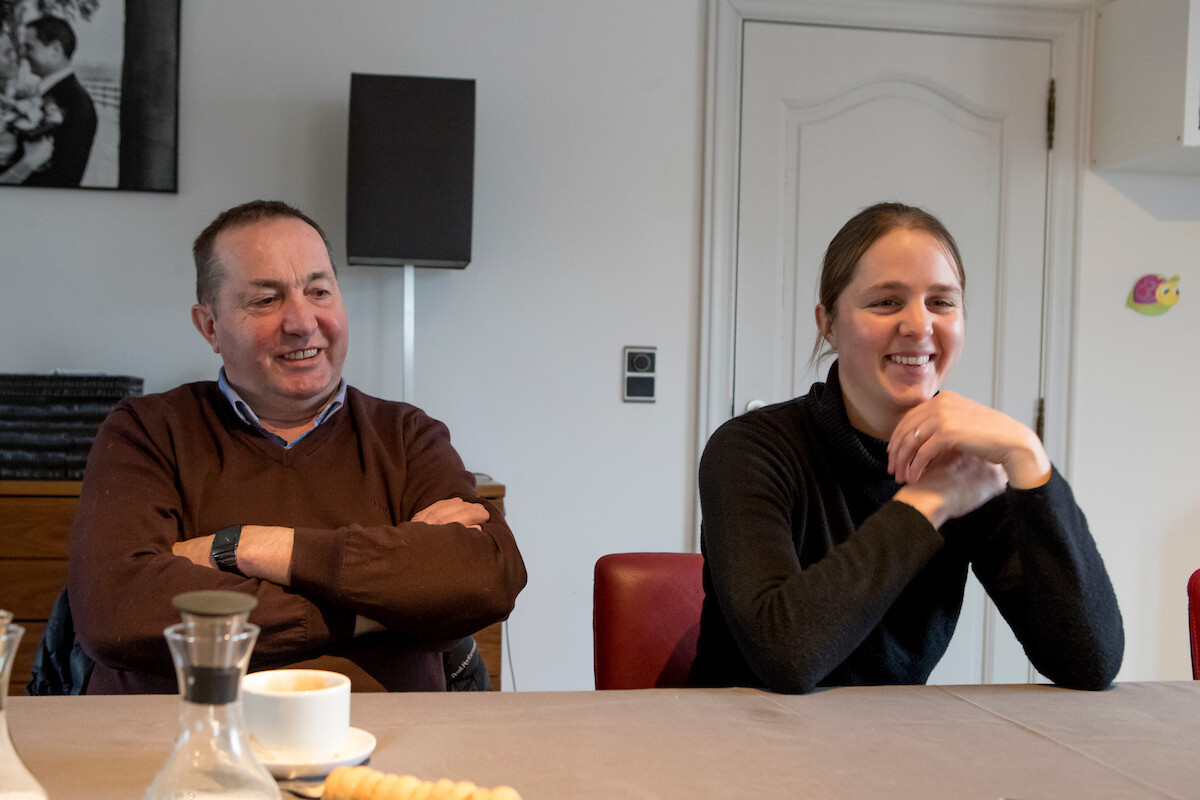 Melanie with her father Hubert. Photo © Hippo Foto - Dirk Caremans.
“My father Hubert founded stud farm Van de Heffinck in the 70s,” Melanie tells about the history of her family farm. “Before getting into horses, he was a farmer and kept cows until the late 90s. Horses are his passion, and he has a good eye for talent, so he managed to build up a good stable. He had a bit of luck too – which is always necessary when starting with something new.”
Heartbreaker, Clinton and Cornet Obolensky are some of the famous breeding stallions closely connected to Van de Heffinck. “Cornet Obolensky was born here, and many good stallions were here when they were young,” Melanie explains. “Clinton and Heartbreaker, for example, were a partnership between my father and Henk Nijhof; they used to buy horses together.”
Family business
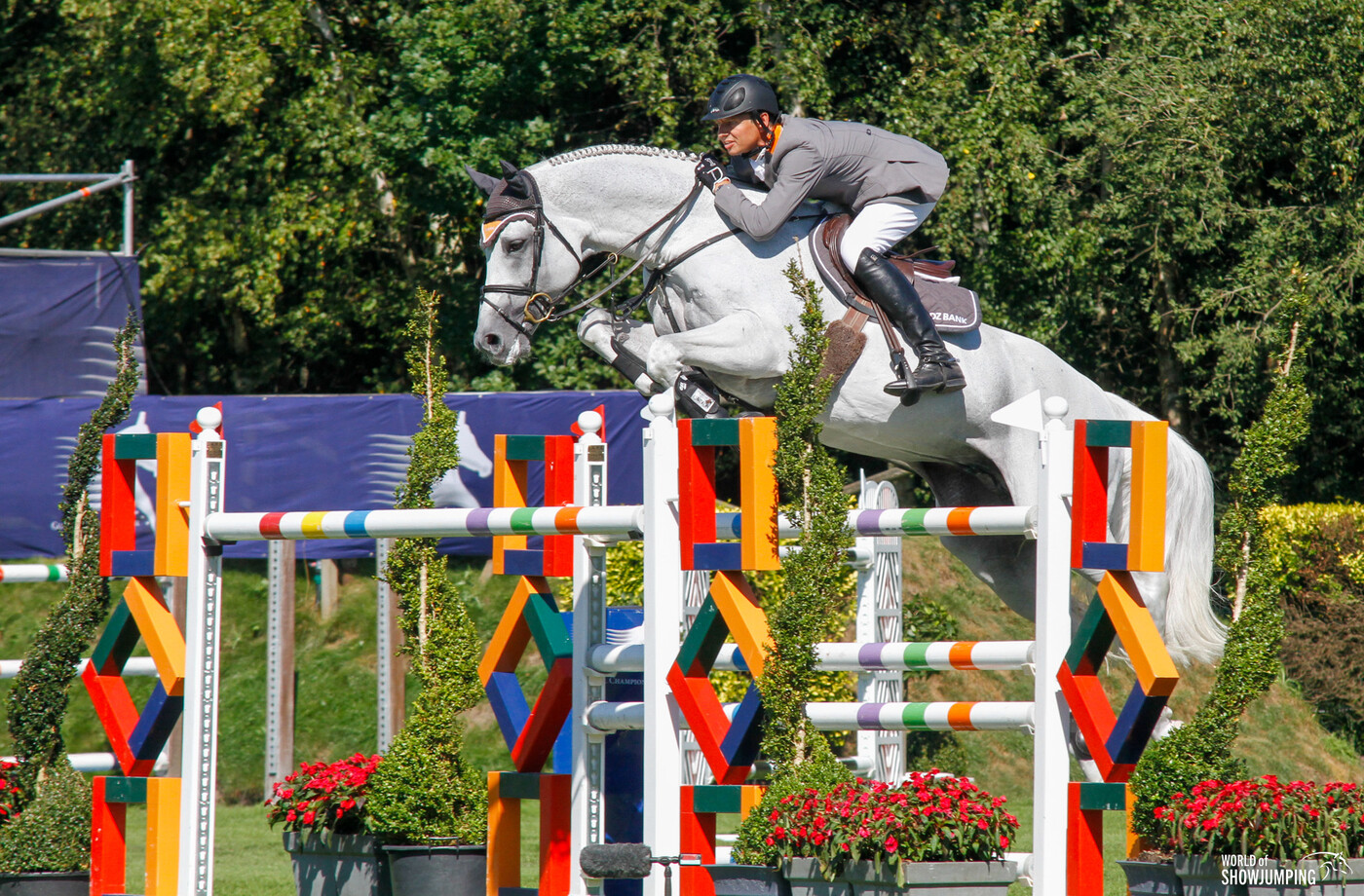 Cornet Obolensky, here pictured with Marco Kutscher, is one of many breeding stallions closely connected to the Hamerlinck-family's stud farm Van de Heffinck. Photo © Jenny A Photo/WoSJ.
Officially, Melanie joined the ownership of the family company in 2011. “I do a bit of everything,” she tells about her role today. “I ride the young horses, I’m helping with collecting the semen and managing the breeding operation.”
“We don’t want the company to become too big, because we want to have an overview and to have a clear feeling of the horses that we are breeding. We want to understand each individual horse, so that we can know what to expect from them. We always have around 100-120 horses at the farm.”
“We have our own system,” she continues. “We don't have a big group of breeding mares; we have a few, and we always like to breed with young mares after seeing that they free jump well and have good x-rays. Even if we want them to have a sports career later on, we are not afraid to let them give birth once. After having a foal, we get them used to the saddle and we see how they develop. If they are exceptionally nice and come from a good family, we might take a few embryos before selling them. Sometimes, we keep one or two mares.”
“With the stallions, it's another system,” Melanie explains. “They also go through screening between the age two and three; we do x-rays, free jumping, and look at their model. If we have a stallion from a bloodline that we believe already is present enough in Belgium, we might decide to sell, so that another country can benefit from that line as well. Geldings don't stay that long here, because you only have one plan with them – sport – and we have enough horses coming every year.”
“Other people may be smarter or work in a different way. We are trying our best and want to stay up to date. However, with horses, you never know – breeding and producing horses is not something that works with a normal business plan.”
Cap the numbers
“Regulating the number of foals that a mare can produce per year is not a bad idea,” Melanie says when asked about her view on the modern reproductive methods. “I think the easiest way to do it would probably be right at the ICSI clinics, that have a database.”
“We don't have so many embryos in the freezer,” Melanie continues. “We take a few every year, always with new mares. We will not murder our own damlines. If the quantity gets too big, then the prices go down and the exclusivity is gone. Around eight foals born from one mare annually should be more than enough."
Olympic prospects
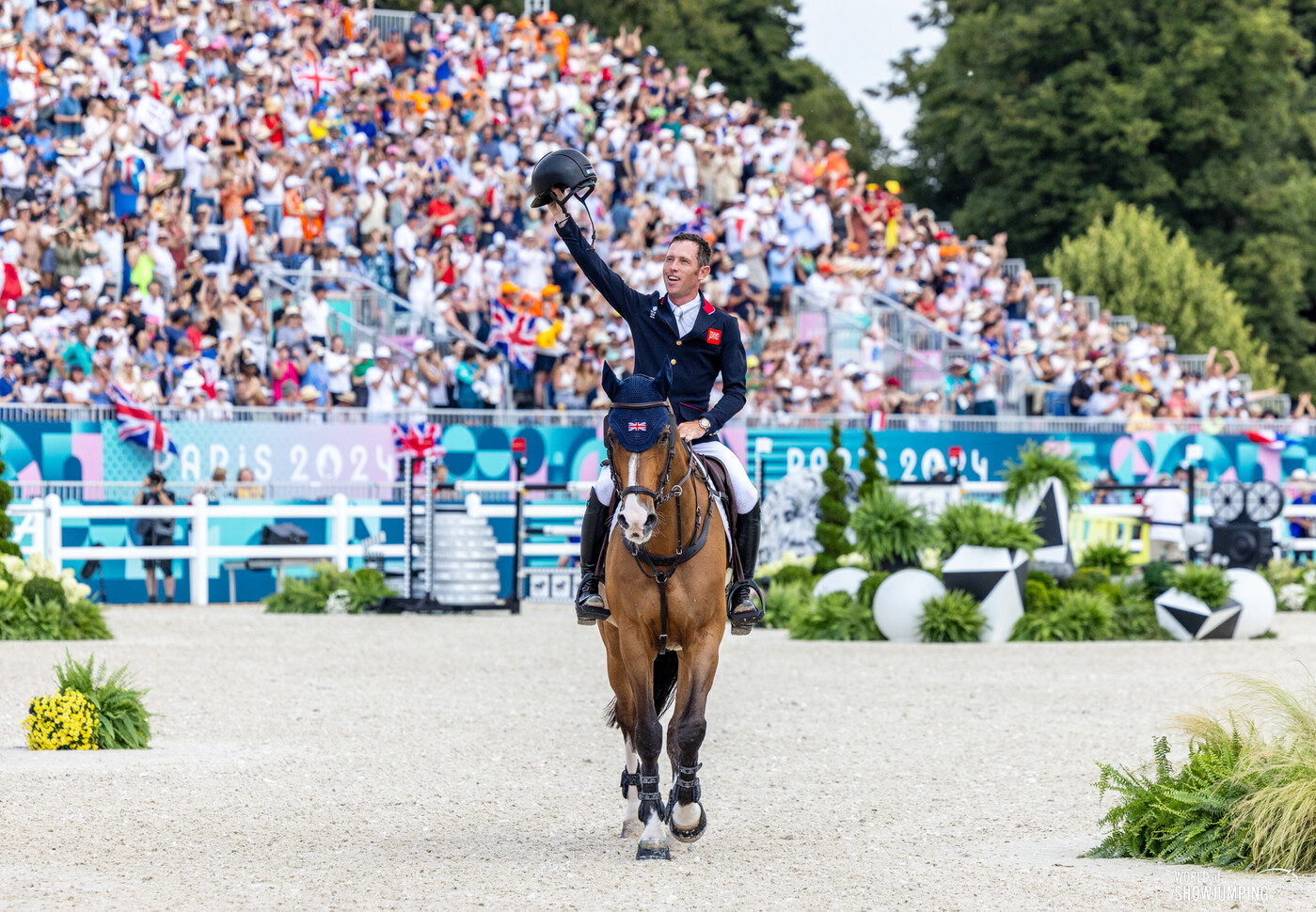 “The 2024 Olympic Games were a nice story for us,” Melanie says about the event that saw Hello Jefferson – by Cooper vd Heffinck – and Romeo 88 – by Contact vd Heffinck – claim team gold for the Brits. Photo © Jenny A Photo/WoSJ.
Melanie, alongside the staff at the stud, rides the young horses at home, and as the horses get older, Van de Heffinck collaborates with Jorik Vervoort, Jelle Sappin, Olivier Philippaerts and Thibeau Spits.
“The 2024 Olympic Games were a nice story for us,” Melanie says about the event that saw Hello Jefferson – by Cooper vd Heffinck – and Romeo 88 – by Contact vd Heffinck – claim team gold for the Brits, while Foncetti vd Heffinck flew the UAE flag with Salim Ahmed Al Suwaidi in the saddle.
While Melanie has crossed paths with many talented horses, Foncetti vd Heffinck is a horse that holds a special place in her heart. “Foncetti is very kind as a stallion. I saw him as a foal, and I rode him as young horse. He became a Grand Prix horse and an Olympian; it's nice that I got to be a part of his story.”
Define good
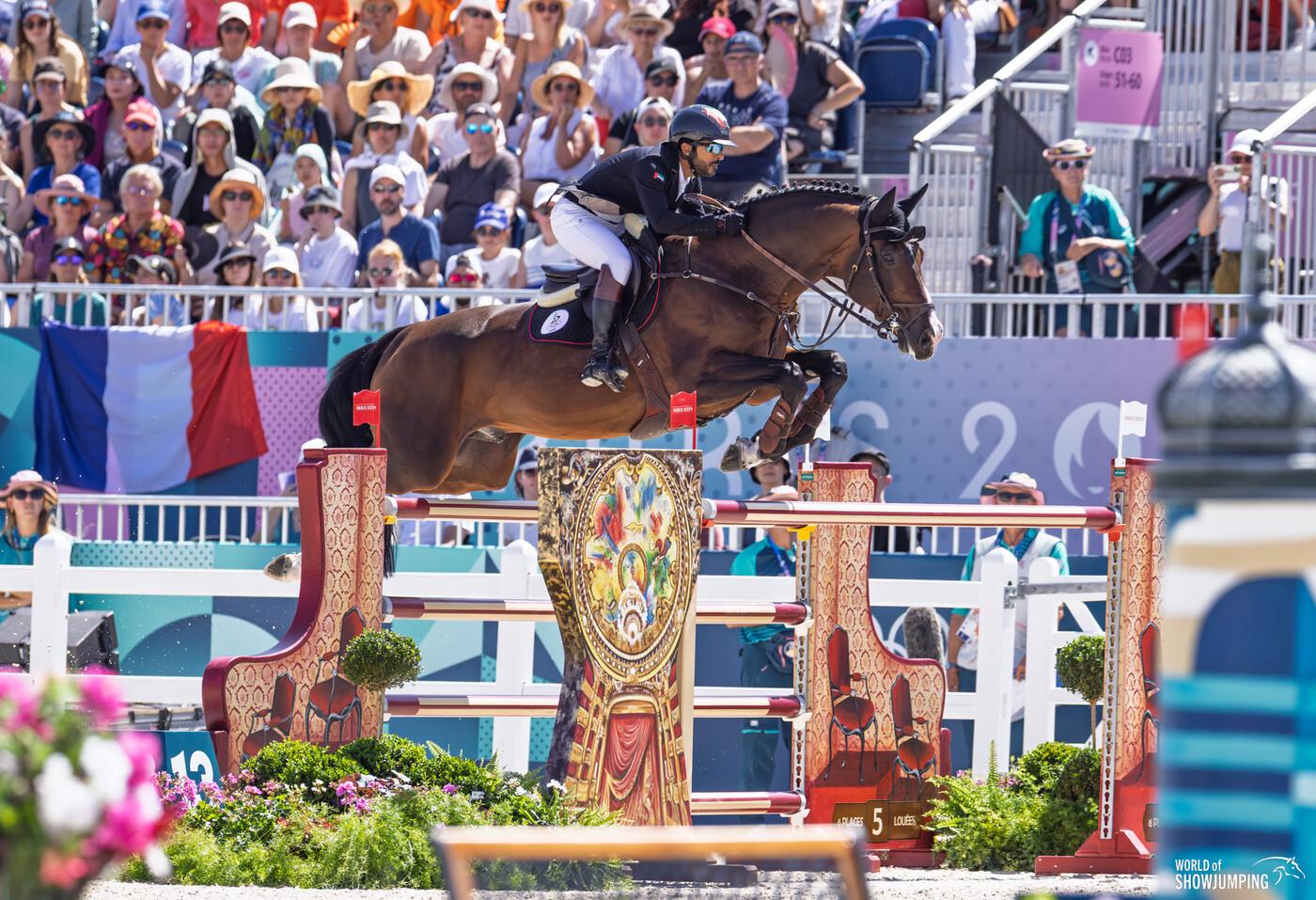 At the 2024 Olympic Games in Paris, Foncetti vd Heffinck flew the UAE flag with Salim Ahmed Al Suwaidi in the saddle. Photo © Jenny A Photo/WoSJ.
“I think there might be too many horses in Belgium, at least young ones; auctions are full, prices are low,” Melanie reflects on the current situation in the horse sales section. “However, more and more people are coming into the sport, and that has changed the type of horse that is needed. Today, commercially interesting horses have to be easy to ride, balanced and intelligent.”
“These qualities must be kept in mind when thinking about the future. Not all horses will be for professional riders, and they cannot all be 1.60m jumpers. There are many nice, good horses, but you need to make the right plan for them as well,” Melanie points out about the challenge of producing horses. “Things don’t always go according to plan, either – that’s life with animals.”
“We are still focused on trying to develop a really good sport horse, a horse that is nice to ride and has a good mentality,” Melanie concludes. “When a client comes to try a horse, they need to have a good feeling on the horse, it's essential. If the feeling is not there, they will not buy. For me, a good horse can also be a consistent jumper at 1.30m level with a rider that is happy with them. In my opinion, not only those who end up jumping at the top level are “good horses” – there is more to being good than sports results.”
4.6.2026 No reproduction of any of the content in this article will be accepted without a written permission, all rights reserved © World of Showjumping.com. If copyright violations occur, a penalty fee will apply.






 Then
Then